Rwanda: Pioneering e-Procurement in Africa
Keeping the procurement process simple and cost efficient is a major challenge that every government faces. Despite best efforts, the public procurement process is often lengthy, complex, and...

Nominations are open for Cohorts 5 and 6! Submit your nominations by October 31, 2026, for Cohort 5 or November 15, 2026, for Cohort 6.
Africa’s public service practitioners grapple with a unique set of challenges, each particular to their portfolios. While Africa's public sector leaders have done much work to improve policy environments in Africa, much more still needs to be done to reach implementation and public service delivery targets that meet the needs of their citizens
Public sector leaders are the front line of implementation and can be empowered to better serve their citizens – with a subtle shift in mindset and the relevant tools and products.
Digital tools, products and technologies can assist African governments to achieve their vision for public service delivery. The ALUSB Public Sector Fellowship partners with governments to show public sector leaders the significance of adopting product management practices and how they will radically transform the way public services are developed.
Through our Public Sector Fellowship, we capacitates public sector representatives to be agents of social change by having an impact on the way they view the operation of public services; developing leaders who can implement a vision of excellence for Africa.

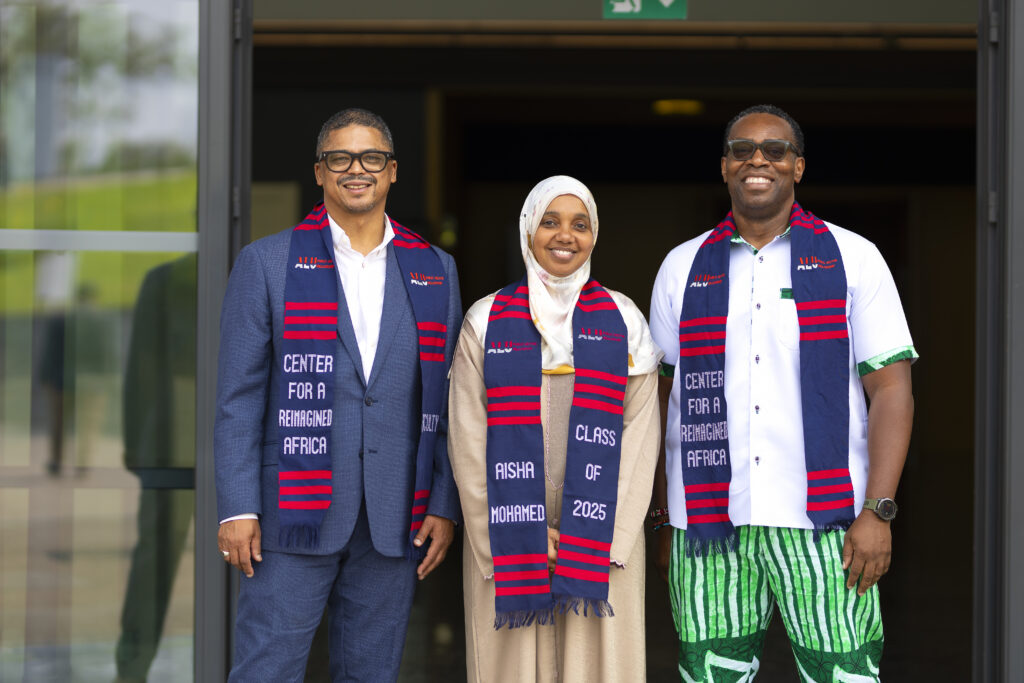
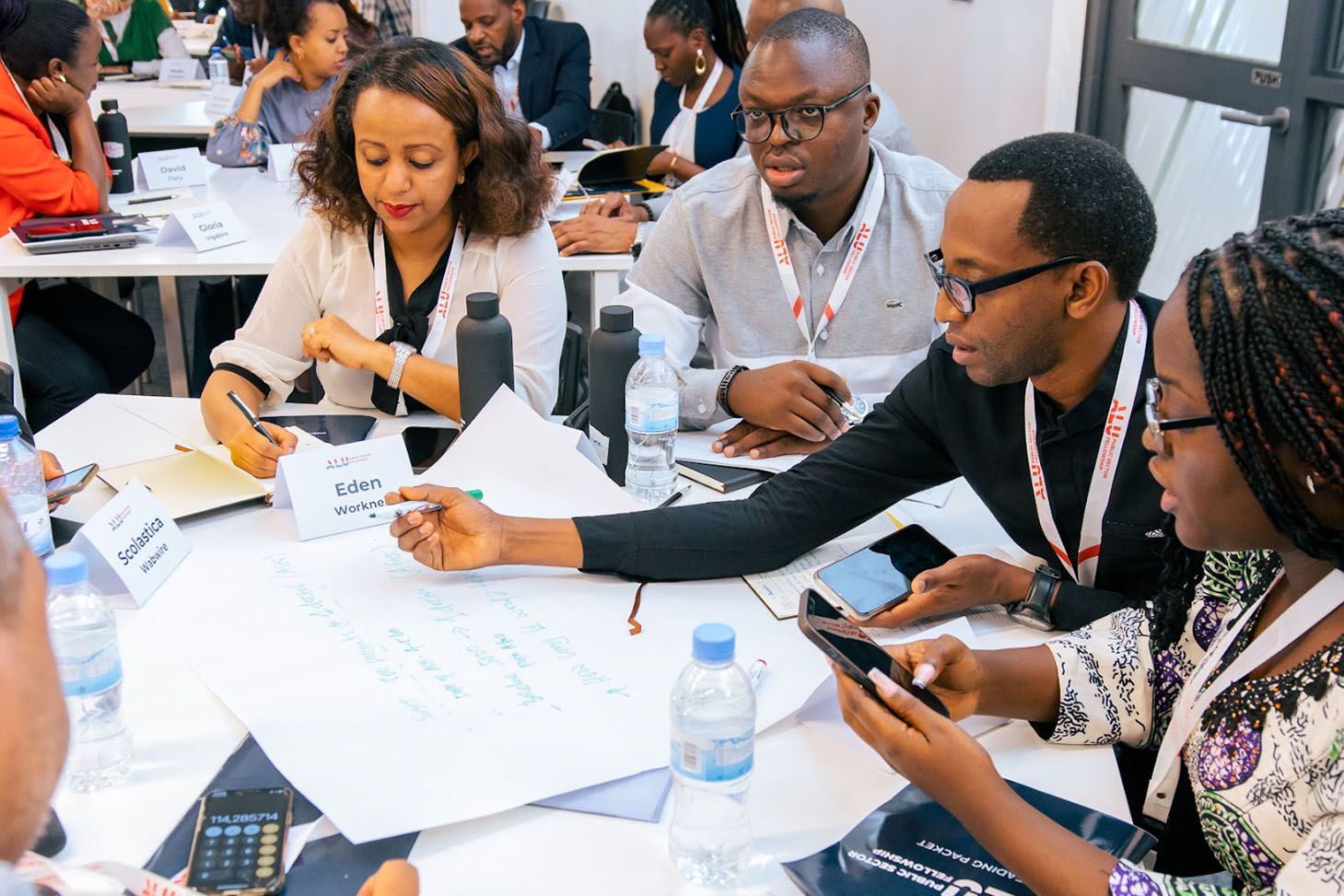
The ALUSB Public Sector Fellowship (PSF) is shaping a new generation of African public sector leaders equipped to deliver modern, citizen‑focused services and strengthen the systems that make governments work. Designed for mid‑to‑senior public sector leaders, the Fellowship equips participants with essential skills in designing citizen‑centered solutions, applying product‑thinking to public service delivery, and practicing ethical leadership that unifies teams around shared goals.
Grounded in inclusive governance, the Fellowship builds leaders’ capacity to close systemic gaps in public service delivery, particularly those that limit women and girls from accessing quality services and reproductive health resources while improving outcomes for all citizens.
Through a blended learning model, product‑thinking approaches that emphasize understanding user needs, iterating solutions, and scaling what works, and evidence‑driven leadership development, the PSF develops execution‑ready leaders and a pan‑African network committed to advancing gender equity, innovation, and citizen‑centered transformation across the continent.
The program is structured into two phases
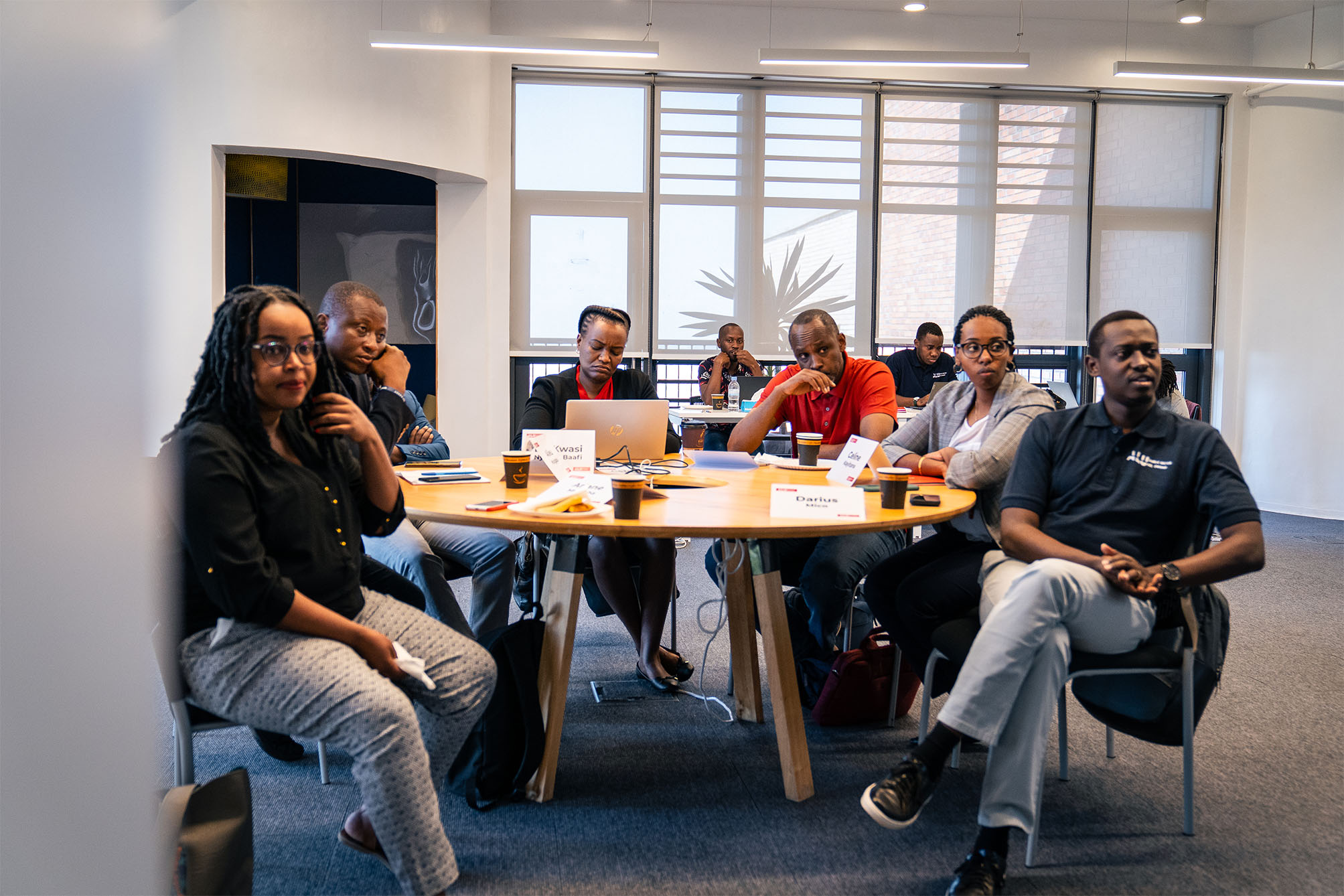
Fellows will focus on implementing pre-approved projects submitted during the admissions and pre-program phases, undergoing a rigorous 8-month process that emphasizes skill acquisition and the cultivation of a service-oriented mindset tailored to meet the evolving needs of citizens .
Phase 2 of the fellowship marks a lifelong commitment to continuous learning and the practical application of insights gained during Phases 1 and 2 to improve service delivery. During this stage, fellows join an alumni community where they can receive support as they continue to implement projects within the public sector. This phase is designed to provide ongoing guidance and assistance, ensuring that fellows can effectively execute their initiatives and achieve measurable improvements in service delivery.
This fellowship is not a typical senior leadership development course—it’s about building a community of action-oriented leaders committed to addressing citizens’ needs. The program emphasizes practical, actionable knowledge over theoretical discussions, equipping fellows with a product management mindset to drive meaningful advancements in service delivery.
The fellowship nurtures a shift from solution-centered thinking to a user-centered approach, empowering leaders to create citizen-driven solutions as they work on their required projects throughout the program, with tangible results as a measure of success.
Problem-solving is an iterative process—more than just achieving a one-time goal. The focus is on fostering agility, deepening understanding of customer needs, and mastering problem-solving techniques to drive sustained improvement.
Ultimately, the fellowship focuses on outcomes, not just outputs. The implemented solution is not the end goal; fellows are trained to track towards the overarching impact of their solutions, ensuring lasting value and real-world results for citizens
The Fellowship is thoughtfully designed to empower participants to solve real-world problems by ideating and executing projects that provide impactful solutions. Central to this mission, the Fellowship plays a crucial role in cultivating a citizen-centric mindset, ensuring that these solutions are tailored to meet citizens’ needs. To achieve this, we actively engage in six core program pillars, which foster collaboration and support the successful execution of projects.
Tailored training in customer-centric thinking and leadership aimed at core skills to drive effective execution in the public sector.
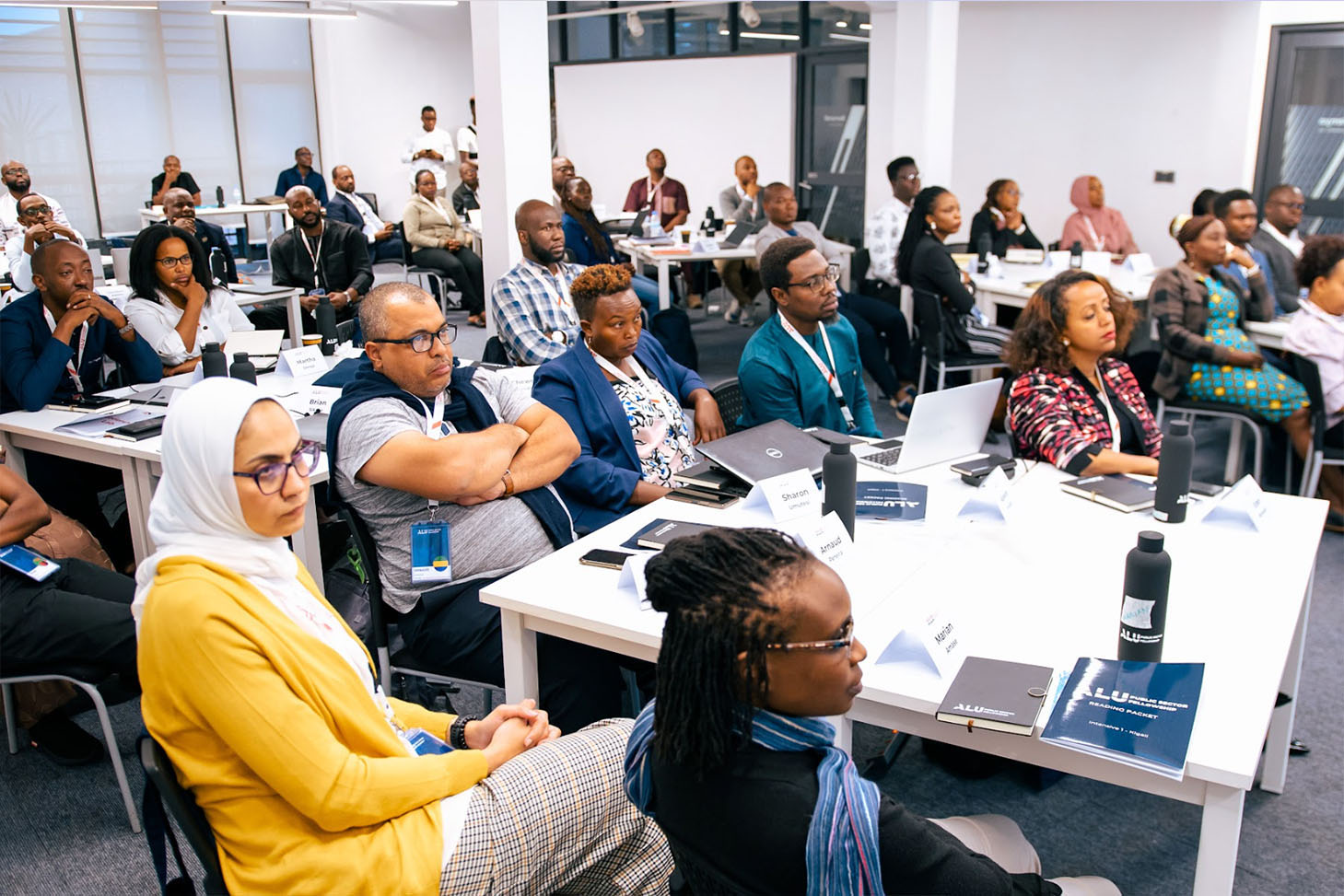
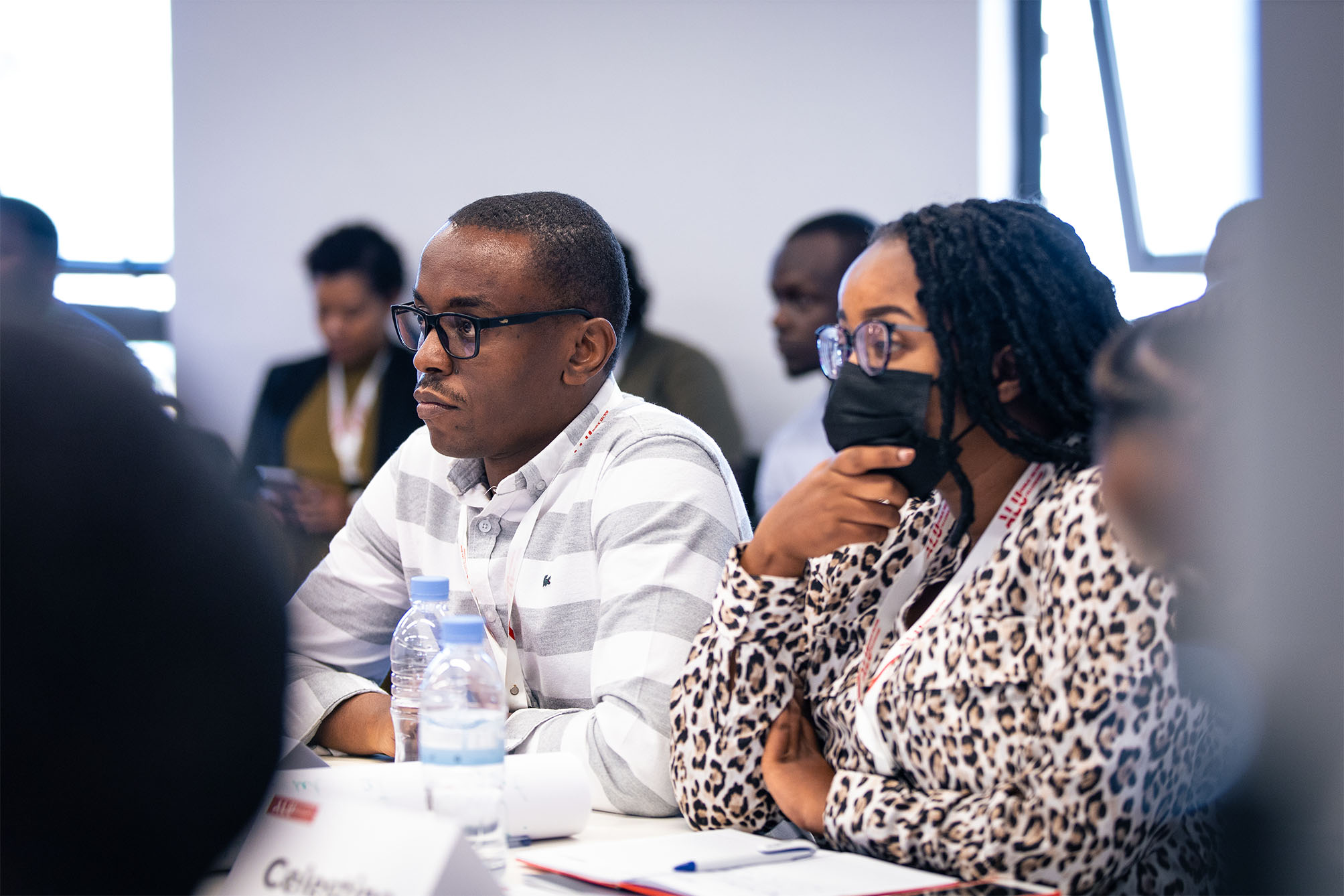
In-person facilitated sessions held each quarter; sessions focus on learnings, sharing experiences, and assessing impact within the group.
Peer review mechanisms to drive accountability, foster the sharing of best practices and build a community of diverse public sector leaders
Regular, structured coaching sessions with executive leadership coaches to provide guidance on issues of personal and professional development.
Led by experienced product coaches who are leading the implementation of user-centred solutions.
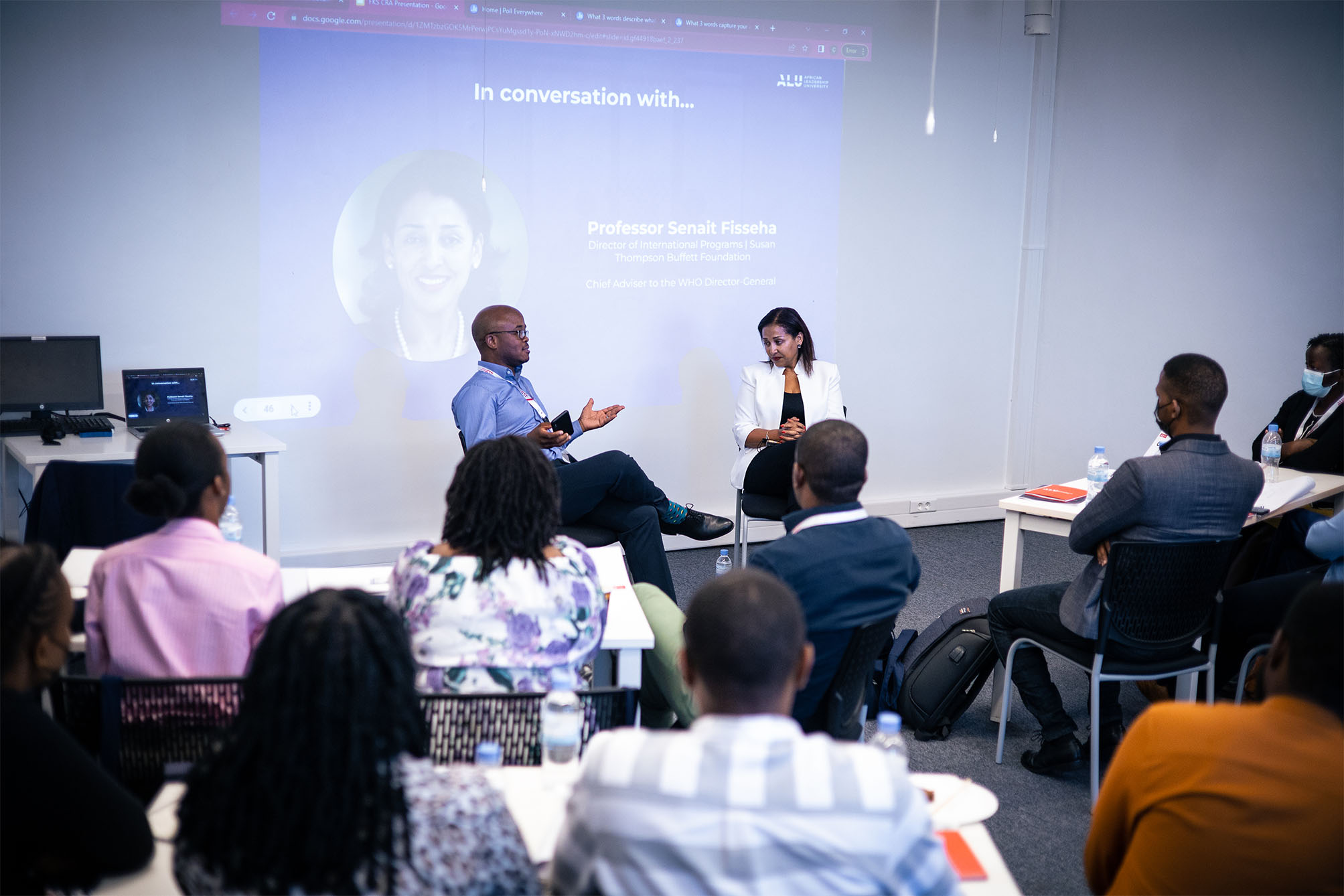
Periodic presentations to peers, programme staff, ministry/agency stakeholders, the presidency, the media and other external guests.
Identify the problem – “fall in love with the problem” you are solving in the public sector.
Testing and Improving Solutions- Validate the solution, gather feedback, improve the MVP, and roll it out to a larger audience.
Product/service (solution) launched on a larger scale with more users. Collect feedback & keep improving. Summarize progress of the public sector project into a case study and showcase.
Nominations are open for Cohorts 5 and 6! Submit your nominations by October 31, 2026, for Cohort 5 or November 15, 2026, for Cohort 6.
COHORT 5 DEADLINES
COHORT 6 DEADLINES

Chidi Afulezi
Head of Faculty

Dr. Ruwayne Kock
Head of Faculty

Ruvimbo Chikwava
Consulting Faculty Member

Yannick Kazadi
Asst Head of Faculty

Margaret Ondeng
Product Coach


African Leadership University (ALU) is an organization under the African Leadership Group. We belong to a lifelong ecosystem for developing African leaders.
Our mission is to develop ethical, entrepreneurial and innovation leaders who will lead the transformation of the African continent.
We believe Africa has the potential to be the go-to source for talent and leaders to drive the continent’s development.
We have two undergraduate institutions in Mauritius and Rwanda. Our post-graduate institutions include a Business School and a School of Wildlife Conservation.
Chidi Afulezi is a seasoned product management coach, digital strategist, and venture builder dedicated to enhancing Africa’s digital and creative economies. He is the founder and managing principal of redKola Digital Labs and The Massive Company. He is also the co-founder of the Product Leadership Accelerator (PLA), aKoma Media, and Rouse Media. He serves as Head Faculty for Product, Innovation, and Entrepreneurship at the ALU School of Business and Center for A Reimagined Africa. He teaches product management at UC Berkeley’s Haas School of Business and General Assembly. His work emphasizes embedding product management principles within Africa’s private and public sectors. With earlier leadership roles at Sony Music, Time Warner, CNN, and AT&T, Chidi holds a bachelor’s degree in Mathematics and Electrical Engineering from NYU and Stevens Institute of Technology, and an MBA from NYU’s Stern School of Business. He is committed to building products and teams that shape Africa and the world’s future.
Dr Ruwayne Kock is an award winning organisational psychologist who works as a practitioner and academic across industries, levels and geographies. He has extensive global experience in leadership development, talent management, executive coaching, and diversity, equity and inclusion (DEI).
Dr Kock holds a Doctorate in Commerce in the field of industrial and organisational psychology from the College of Business and Economics, University of Johannesburg.
He serves as Head of Faculty for Leadership at the African Leadership University School of Business
Ruvimbo is currently the Founder & Managing Partner at Blue Savanna Limited, an advisory firm made up of a network of Partners across Africa that works with its clients to facilitate their successful entry into different African Markets, leveraging the principles of Product Management to ensure market fit. He is also a Co-founder and Director at African Solutions Private Limited and Cornerstone Conservation Limited.
He started off his career with PwC and later he was the Executive in charge of Treasury and Business Development at the most extensive integrated agro-processing company in the region. He serves as a consulting faculty member for the Public Sector Fellowship program under the Centre for Reimagined Africa, at the Africa Leadership University. Prior to that, he served as a consulting faculty member at the African Leadership University’s School of Business, specifically within their Product, Innovation, and Entrepreneurship program, and as a Subject Matter Expert for the Capstone Projects.
An MBA holder, Ruvimbo also sits on various boards of private companies involved in Private Equity, Healthcare Provision, Business Process Outsourcing, conservation, and biodiversity management.
Yannick is a business executive with a background in business expansion, Business Planning, strategic initiatives, market research, negotiation, business partnerships, sales, market development, and marketing. He currently serves as CEO of Yellowstone DRC, a company specialising in infrastructure development and management.
Yannick holds an MBA from the African Leadership University and is currently pursuing a Msc in Industrial Project Management with the University of Birmingham in the UK with a particular interest in investigating factors contributing to project failure in Africa, particularly in infrastructure as well as practices that could be employed to improve efficiency in project planning and execution.
Yannick serves as Assistant to the Head of Faculty for the Center for a Reimagined Africa and has previously served in the same capacity at the African Leadership University School of Business.
Margaret Ondeng is a seasoned fintech product leader with a decade of experience driving innovation in Sub-Saharan Africa. As the Product Head of Fintech at ECS Africa, she leads cross-functional teams to deliver cutting-edge payment product solutions across the region.
Margaret’s professional journey spans roles in prominent companies such as Mahindra Comviva, Inmobia Technologies, DPO Group, Equity Bank and Peach Payments. She specializes in product management, leading teams to shape, innovate, and execute product strategies that meet the unique demands of African markets.
Margaret’s commitment to innovation extends beyond her career. She actively engages with startup ecosystems and educational institutions, mentoring young talent and serving as a judge for global challenges like Technovation and the Diamond Challenge. Recognized by Technovation Global as a Judge Advisor, Margaret has also earned accolades such as IBM’s Master the Mainframe Champion and the Grace Hopper Scholar award from Facebook.